You want the waterfront lifestyle without surprises. If you are eyeing a canal or Gulf‑access home in Hernando Beach, a smart checklist will save you time, stress, and money. In this guide, you will learn exactly what to verify first, which documents to request, and which inspections to order before you remove contingencies. Let’s dive in.
Why Hernando Beach is unique
Hernando Beach is a Gulf‑coast canal community with dredged canals, private docks, and a marked route out to the shallow Gulf flats. Local navigation guides note that the approach crosses very shallow areas, and some channels have limited controlling depths. Reports show that drafts over about 4 feet can be challenging without careful routing. Always confirm depths for your specific route and boat size rather than relying on a generic “Gulf access” claim. You can review approach notes for the inlet and flats through local navigation resources.
Start with these three must‑verifies
Before you fall in love with the view, lock in the three items that most affect value and usability.
- Seawall and dock permits and as‑builts. Ask for county permits and any Florida DEP authorizations for seawalls, docks, or boatlifts. Confirm who built the structures, when, and whether there are engineering reports on file. Hernando County regulates marine construction and setbacks, so start your file check with the county’s rules and permit history through the Hernando County marine construction framework.
- Elevation certificate and FEMA flood status. If the property is in a Special Flood Hazard Area, lenders often require flood insurance. Premiums depend on how the home’s elevation compares to the Base Flood Elevation. Start with the county’s floodplain information and ask the seller for any existing elevation certificate.
- Channel depth to open water. Verify controlling depth at mean lower low water for the route from the dock to the marked channel, then to the Gulf. Ask for recent soundings, check local marina guidance, and confirm vertical and horizontal clearances. For context on local access, review the Hernando Beach inlet overview.
Permits and rules to confirm
Understanding who regulates what will help you set realistic timelines and costs for any future work.
County oversight
Hernando County regulates zoning, floodplain standards, and marine construction such as docks and seawalls. File‑level checks and permits run through the Building and Zoning offices. Review the county’s marine construction framework and confirm that any existing waterfront structures have permits and passed inspections using the county’s code resources.
State authorizations
If structures extend waterward of the mean high‑water line or occupy state submerged lands, the Florida Department of Environmental Protection may require authorization or a submerged‑lands lease. This applies to many docks, seawalls, dredging, and similar work. Learn how these rules apply through the DEP’s submerged lands management.
Environmental protections
Manatee protection zones, seagrass areas, and mangrove rules can affect boat speeds, anchoring, and construction methods. Check current maps and guidance from the Florida Fish and Wildlife Conservation Commission. Seasonal manatee protections and speed restrictions are summarized in FWC’s manatee advisories.
On‑site inspections that protect your budget
A thorough marine and property inspection will surface expensive issues early. Here is what to look for and order.
Seawalls and bulkheads
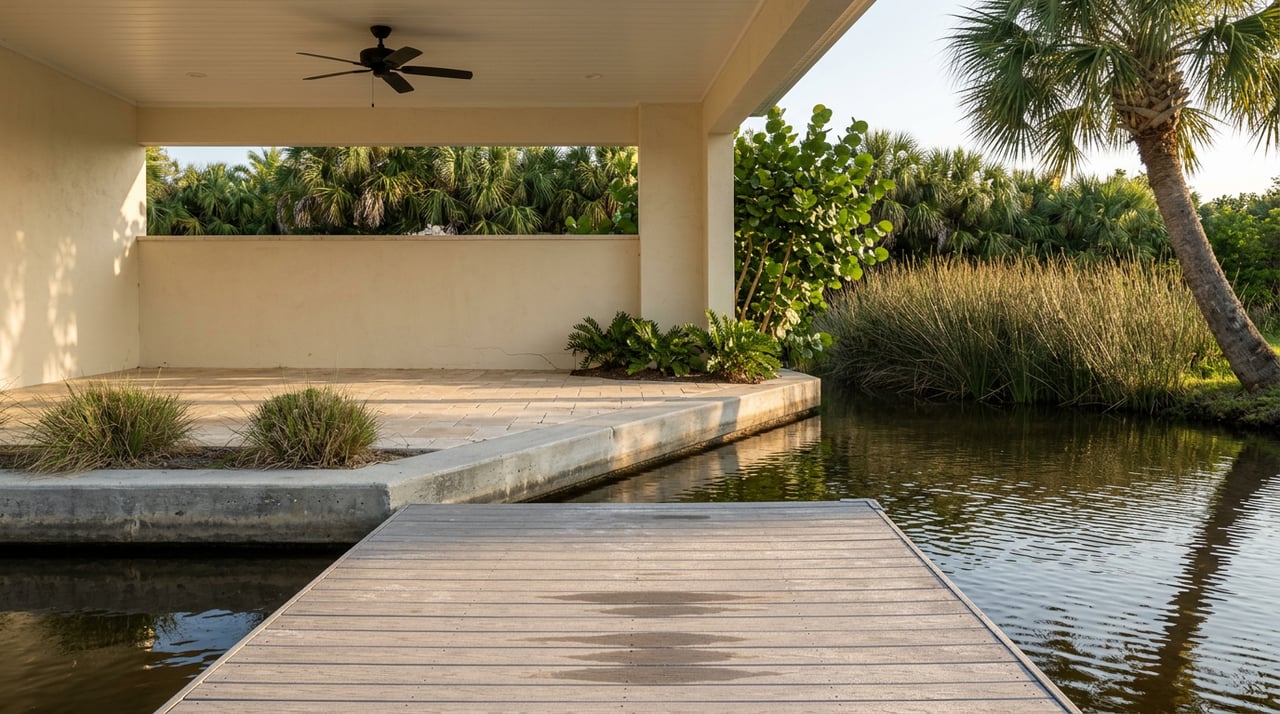
- What to look for: leaning or bulging panels, cap cracks, broken or corroded tiebacks, signs of soil washout or undermining at the toe, and seepage behind the wall. Settlement in yards or patios near the wall is a red flag.
- What to ask and order: request county and DEP permits, as‑built drawings, repair invoices and warranties, plus the wall’s age and construction type. Order a licensed marine or structural inspection. If the toe is not visible, ask for an underwater dive inspection and a remaining‑life estimate.
Docks, pilings, lifts, and electrical
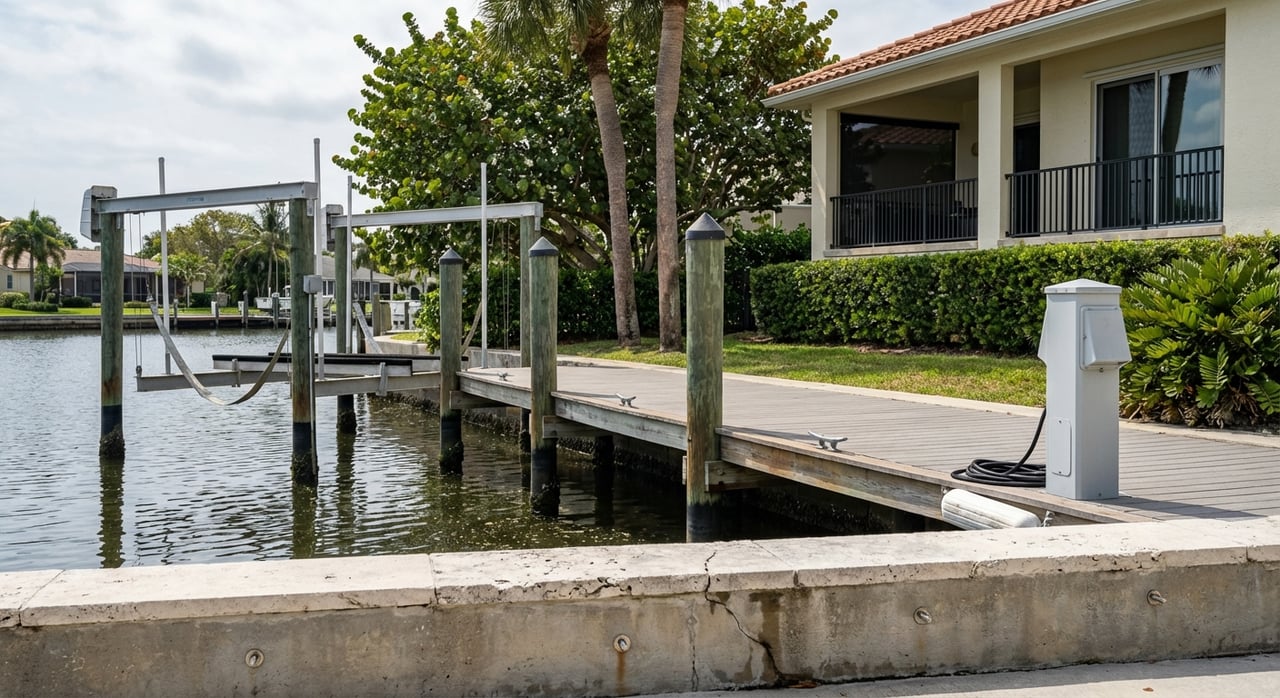
- What to look for: pile rot or marine borer damage, loose or corroded fasteners, soft decking, and misaligned or noisy lift gear. Verify that dock electrical is GFCI‑protected.
- What to ask and order: request permits for the dock and any electrical to the lift, boatlift capacity and last service date, and ownership or easements for pilings that appear near lot lines. Consider a licensed dock and lift inspection with photo or video of underwater piling conditions. You can see what a comprehensive marine inspection typically covers through inspection service overviews.
Channel depth, tides, and access
- What to look for: controlling depths at mean lower low water for your route to the Gulf, the effect of seasonal shoaling, and vertical clearance under any fixed structures on your route. Boats with deeper draft may face limitations near the flats.
- What to ask and order: ask the seller for recent soundings or surveys, then call a local dockmaster for current observations. Review local approach notes for the inlet through navigation resources.
Flood and insurance planning
Flood zones and elevation
Hernando County uses FEMA Flood Insurance Rate Maps. If the home lies in a Special Flood Hazard Area, many lenders require flood insurance. Premiums depend on your elevation relative to the Base Flood Elevation. Start by reviewing the county’s floodplain information and request any existing elevation certificate from the seller.
If you believe a lot is mapped incorrectly or sits above the Base Flood Elevation, you can explore a Letter of Map Amendment or Revision. See FEMA’s process overview for LOMA and LOMR.
Homeowners and wind coverage
Coastal homes in Florida often face higher windstorm premiums and tighter underwriting. Ask the seller which carrier currently insures the property, whether a private market or Citizens policy is in place, and for a recent declarations page. Prior claim history and roof condition can affect quotes.
Septic or sewer: what to check
Parts of Hernando County are transitioning from septic to sewer to protect sensitive springs and waterways. Confirm whether a property uses an on‑site system or is connected to public sewer, and whether a conversion is planned.
- What to request: septic permit history and pump records from the Florida Department of Health in Hernando County. You can review program information through the county DOH’s on‑site sewage program.
- What to ask the utility: whether the parcel lies in a planned conversion district, expected owner assessments, incentives for upgrades, and connection timelines. Check the county’s septic‑to‑sewer project updates.
Environmental and navigation restrictions
Hernando Beach sits near sensitive habitats. Seasonal manatee protections can impose speed limits and restrict certain activities. Seagrass and mangrove protections may require permits or mitigation for in‑water work. Review FWC’s manatee advisories and confirm environmental constraints with DEP before planning any dock modifications using state submerged lands guidance.
Dredging and channel maintenance
Hernando County has been involved in multi‑million‑dollar dredging and maintenance projects in the Hernando Beach area. Spoil island and mitigation proposals have at times been controversial and can affect shoaling and sheltering patterns. Ask your agent for any recent dredge reports and the county’s maintenance plan so you understand how channel conditions may change. For background on local dredging history, see coverage in the Hernando Sun.
Transaction checklist: documents to request
Collect these items early, ideally during your inspection period.
- County and, if applicable, DEP permit records and as‑built drawings for the seawall, dock, and boatlift. Reference the county’s marine construction framework.
- Elevation certificate, any flood insurance declarations page, and any flood claim history. Start with the county’s floodplain page.
- Recent depth soundings or survey for the navigation route to open water, referenced to mean lower low water. For local context, see the Hernando Beach inlet overview.
- Seawall and dock inspection reports, plus repair invoices and warranties.
- Septic permit records, pump receipts, and any notice of a pending septic‑to‑sewer assessment. See the on‑site sewage program and county sewer project updates.
- HOA or deed restrictions that may limit dock length, boat storage, or exterior activity.
Professionals to hire before you waive contingencies
- Licensed marine or dock and seawall inspector, with underwater video if the toe or pilings are not visible. See what these inspections typically include in this inspection overview.
- Structural engineer for seawall, dock, or lift concerns.
- Licensed surveyor to identify the mean high‑water line and verify upland versus state submerged lands boundaries using DEP guidance.
- Septic inspector qualified through the Department of Health, and a sanitary engineer if sewer conversion is proposed.
- Title attorney or closing agent to confirm riparian rights, recorded easements, and any maintenance obligations or assessments tied to the property.
Sample questions to ask the seller
- What year was the seawall built, what material was used, and are there permits, as‑builts, or engineering reports on file?
- When was the dock and lift last serviced, and are electrical components permitted and GFCI‑protected?
- What is the controlling channel depth at mean lower low water from this dock to the marked channel, and when were depths last measured? Has the county scheduled dredging?
- Is the home in a FEMA Special Flood Hazard Area, and is there an elevation certificate? Any prior flood claims?
- Is the lot in a Weeki Wachee springshed priority focus area or a planned septic‑to‑sewer district? What costs are expected and when?
- Are there any HOA or deed restrictions that limit dock size, boat storage, or exterior boat activity?
- Has any in‑water work required mitigation, or are there open violations or enforcement actions?
- Are there seasonal manatee or other protection zones that affect boating from this parcel?
Red flags and negotiation levers
- Walkaway red flags: missing permits for major marine work, uninsurable property due to wind or condition, active seawall or dock failures without reliable repair estimates, mandatory sewer assessments you cannot accept, or recorded encroachments that block navigation with no clear remedy.
- Negotiation levers: request seller‑paid, permitted repairs with engineer sign‑off, holdback of funds in escrow for repairs, a seller‑provided current depth sounding or a county dredging commitment, or a price adjustment for seawall replacement or sewer connection charges. Base requests on written professional estimates.
Make your offer smarter in Hernando Beach
A clean view and a boat lift do not tell the whole story. When you confirm permits and as‑builts, get an elevation certificate, and verify channel depth early, you reduce risk and focus your negotiation on facts. If any of those three raise concerns, bring in the right professionals for cost and feasibility before you move forward. That is how you buy the waterfront lifestyle with confidence.
Ready to evaluate a specific Hernando Beach property step by step? Reach out to The Philhower Group for local guidance, document checklists, and a clear plan from first showing to closing.
FAQs
What makes boating access in Hernando Beach different?
- The approach to the Gulf crosses shallow flats and some channels have limited controlling depths, so you need to verify your specific route and draft using local guidance like the inlet overview.
How do I confirm a seawall or dock was permitted?
- Ask for Hernando County permits and any Florida DEP authorization or submerged‑lands lease, then match documents to site conditions; start with the county’s marine construction framework and order a marine inspection.
How do flood zones affect my loan and insurance in Hernando Beach?
- If the home is in a Special Flood Hazard Area, lenders often require flood insurance; premiums depend on the elevation certificate and Base Flood Elevation. Review the county’s floodplain info and see FEMA’s LOMA and LOMR process if mapping seems inaccurate.
What should I know about septic‑to‑sewer conversions near Weeki Wachee?
- Some areas are scheduled for conversion to protect springs; verify whether the parcel is in a project area, the likely assessment, and the connection timeline using the county’s septic‑to‑sewer updates and DOH’s on‑site sewage program.
Who maintains Hernando Beach channels and why does it matter?
- Hernando County has led dredging and maintenance projects and related mitigation efforts; the schedule and scope influence depth and navigation. See background in the Hernando Sun, and request recent dredge or maintenance reports during due diligence.
Do manatee zones limit how I use my boat from my dock?
- Seasonal and permanent protection zones can impose speed limits and restrict certain activities in sensitive areas; review FWC’s current manatee advisories before planning routes or dock work.