Open two tabs on any portal and Spring Hill looks like a simple choice. A new single-story from a national builder sits near $335,000. A block home built in 1989 with a mature yard sits in the mid $200s. Same ZIP, same commute to the Suncoast Parkway, roughly $75,000 apart.
That gap is not a construction-quality story. It is an insurance, incentive, and dues story, and once you price those three lines in, the "cheaper" resale is often the more expensive home to own. The buyer who wins in Spring Hill right now is the one who reads the gap correctly.
The Number That Reframes The Comparison
Hernando County builders pulled 1,975 residential permits in 2025, down 21.2% from the prior year, with 1,734 of those on single-family homes. That pullback is the reason new-build sticker prices are holding firm even while the broader market softens. On the resale side, roughly 28% of listings in ZIP 34608 have cut their price as of early July 2026, and the county-wide share sits closer to 30%. Two different negotiation environments, two blocks apart.
What $335,000 Buys You New Right Now
The active new-construction bench in Spring Hill is unusually deep for a market this size. Ryan Homes lists ten communities across the area. Holiday Builders is running scattered-lot production out of its Cornerstone and Value Collections from the model at 13524 Spring Hill Drive, with plans from about 1,300 to 2,700 square feet and pricing that starts in the mid $300s. Maronda Homes is selling from its Drexel model on scattered lots with no HOA or CDD. Pulte's Caldera community carries floor plans from 1,286 to 3,416 square feet with a resort-style pool and trails feeding into the Suncoast Trail. M/I Homes is building Avalon West with a community pool and park. Adams Homes and Homes by WestBay round out the field.
The Redfin new-construction feed showed 198 new homes for sale in Spring Hill at a $335,000 median list as of August 1, 2026. At Northridge, the builder is currently offering up to $25,000 toward closing costs with the use of its preferred lender and title company. That single line item is worth more than most buyers realize once you convert it into a rate buydown.
What The Mid $200s Buys You In Resale
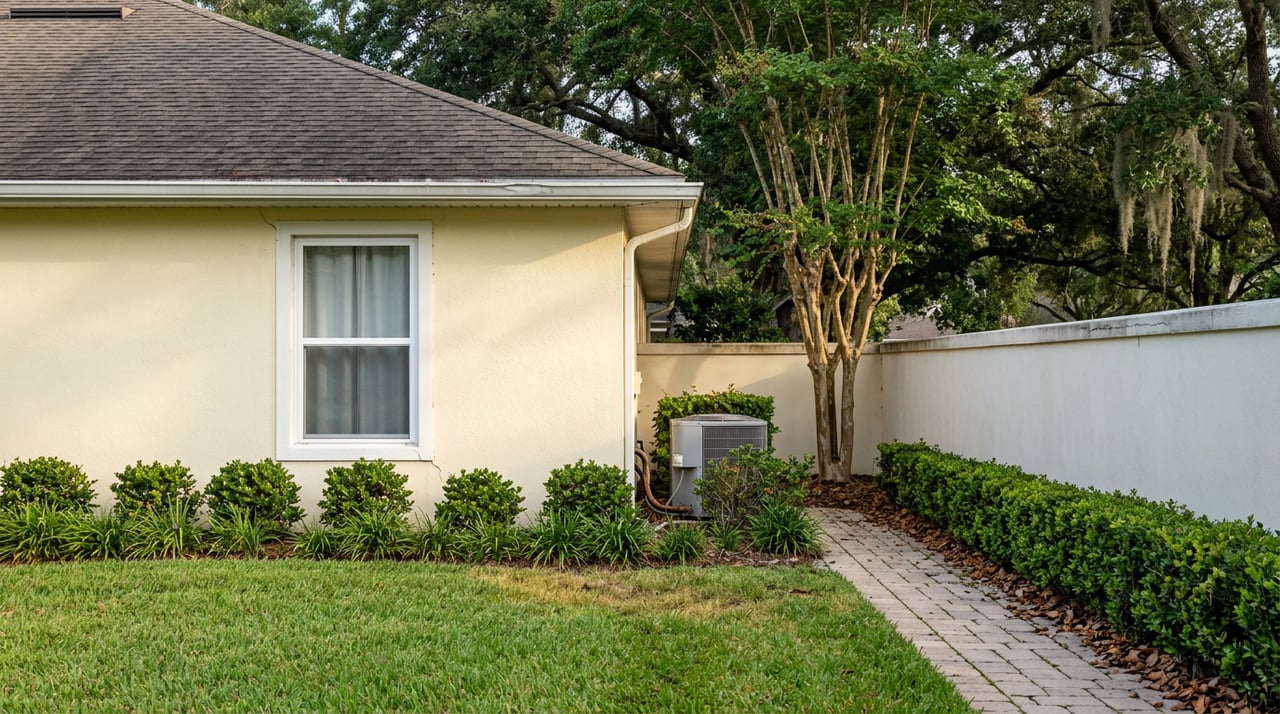
The resale bench is dominated by 1980s and 1990s block construction. Seven Hills, wrapping the 18-hole course on Mariner Boulevard, holds 421 homes built between 1988 and 2023, with a median year built of 1989. Sterling Hill spans more than 900 acres with pools, parks, and walking trails, and prices sit through the broad middle of the Spring Hill market. Other resale-heavy pockets include Autumn Oaks, Jordan Pointe, and Weeki Wachee Acres.
The county-wide MLS snapshot from mid-July 2026 showed 613 active single-family listings across 34606, 34608, and 34609 at a $338,000 median list price and 52 median days on market. Zillow's Home Value Index for 34608 sat at $295,124 on July 6, 2026, down 2.4% year over year. Homes are selling roughly 6% below list, on average.
The Roof Is The Pricing Mechanism Nobody Prints In The Listing
Citizens Property Insurance, Florida's state-backed insurer of last resort, now covers 4,534 homes in Hernando County at an average premium of about $1,699 per year, per the Corporation's April 2026 Policies in Force report (citizensfla.com). Citizens is the fallback when private carriers pass. A rising Citizens count in a market is the clearest available signal of where private premiums have spiked and where coverage has become hardest to get.
Two variables drive most of that: roof age and elevation. A 2026 build carries a fresh shingle or metal roof under current code and typically qualifies for private-market pricing. A 1989 Seven Hills home with a 12-year-old roof frequently does not, and either the buyer prices in a re-roof before closing or the annual premium climbs into four figures on top of principal, interest, and taxes.
The Spring Hill sticker gap is almost never what the buyer actually pays each month. Roof age, builder credits, and community dues quietly rearrange it.
The Carrying-Cost Table Buyers Rarely Build For Themselves
Below is a like-for-like month-one comparison at Spring Hill's current medians, using the 6.52% 30-year rate cited in the Momentum Hernando County scorecard for July 2026, 20% down, and county-average insurance figures. Property tax is excluded because millage varies by parcel and homestead status.
| Line item | New build near $335,000 | 1989 resale near $260,000 |
|---|---|---|
| Down payment (20%) | $67,000 | $52,000 |
| Financed amount | $268,000 | $208,000 |
| Principal and interest at 6.52% | ~$1,695 | ~$1,315 |
| Homeowners insurance, estimated monthly | ~$110 (private, new roof) | ~$185 (Citizens-adjacent, older roof) |
| HOA or CDD, typical range | $0 to $150 | $0 to $75 |
| Effective builder credit spread over 30 years | up to -$70/mo | none |
| Estimated month-one carry, excluding tax | ~$1,735 to $1,885 | ~$1,500 to $1,575 |
The gap narrows fast. On a new-build purchase where the buyer routes a $25,000 closing credit into a permanent rate buydown, the monthly delta versus a comparable resale can compress from what looks like a $380 difference at sticker to under $200 in real carry. That is a different negotiation than the portal suggests.
Where The Leverage Actually Lives
Leverage in Spring Hill right now runs in opposite directions on either side of the gap.
On the resale side, leverage sits with the buyer. The 28% price-cut share in 34608 and the 52-day median time on market mean sellers of 1990s block homes are increasingly the ones adjusting, particularly on properties where the roof, HVAC, or windows are approaching replacement age. This is where a well-documented inspection report becomes a pricing tool rather than a due-diligence formality.
On the new-construction side, leverage sits with the builder on price and with the buyer on financing. National builders in a market with a 21.2% permit pullback do not want to visibly cut base prices, because that resets comps across their standing inventory. What they will do is stack closing-cost credits, rate buydowns, and design-center allowances. The Northridge $25,000 offer is a public example. In private conversations at any given model, similar concessions surface on standing inventory and on homes with nearing move-in dates. Ask about the buydown, not the discount.
The Friction That Surfaces Between Contract And Closing
Three items catch out-of-area buyers who compare new and resale on price alone.
First, HOA and CDD disclosure. Master-planned new construction like Caldera and Sterling Hill carries community dues that do not show up in the median list figure. Maronda's scattered-lot product carries none. The difference across a 30-year hold can be larger than the sticker premium.
Second, close timing. Builder-controlled closings run on the builder's calendar and typically finish faster than resale, which matters for relocating buyers coordinating a home sale in another state. The trade is flexibility. A resale seller can often accommodate a delayed close if the offer is right; a builder generally cannot.
Third, insurance binding. Buyers in the mid $200s bracket routinely discover the private-market premium at the four-point inspection stage, after they are already emotionally committed. On a 1989 block home, request the four-point and wind mitigation reports before the inspection contingency expires, and shop the premium in parallel with the appraisal.
Questions This Comparison Raises
Is Spring Hill a buyer's market or a seller's market in mid 2026? Seven Hills sat at 4.5 months of supply as of July 15, 2026, which reads balanced. Across the three main ZIP codes, the 52-day median and the 28% price-cut share tilt slightly toward buyers, particularly on resale product priced to a 2022 comp.
Does new construction actually appreciate faster than resale here? Not automatically. The Hernando County typical home value has moved roughly 6.1% per year over the last five years, which includes both segments. New construction appreciation depends heavily on how quickly the surrounding community fills in and how the builder prices phase-two and phase-three releases. A resale in an established community like Sterling Hill or Seven Hills is competing against a known set of comps, not an unfinished pipeline.
What is the single biggest miss buyers make comparing the two? Ignoring the roof. Two identical floor plans a mile apart can carry an $800 to $1,200 annual insurance spread on nothing but roof age and wind-mitigation credits. That is the delta that quietly closes the sticker gap.
Where To Go From Here
The Spring Hill trade-off rewards buyers who look past the portal median and price the full carry, including insurance and dues, before they tour. If you are weighing a new build against a 1990s resale and want a side-by-side broken down for your specific parcels and financing scenario, The Philhower Group will run the numbers with current MLS comps, current insurance quotes, and current builder incentive sheets. Get your free home valuation and consultation, and we will show you what your money actually buys on both sides of the gap.