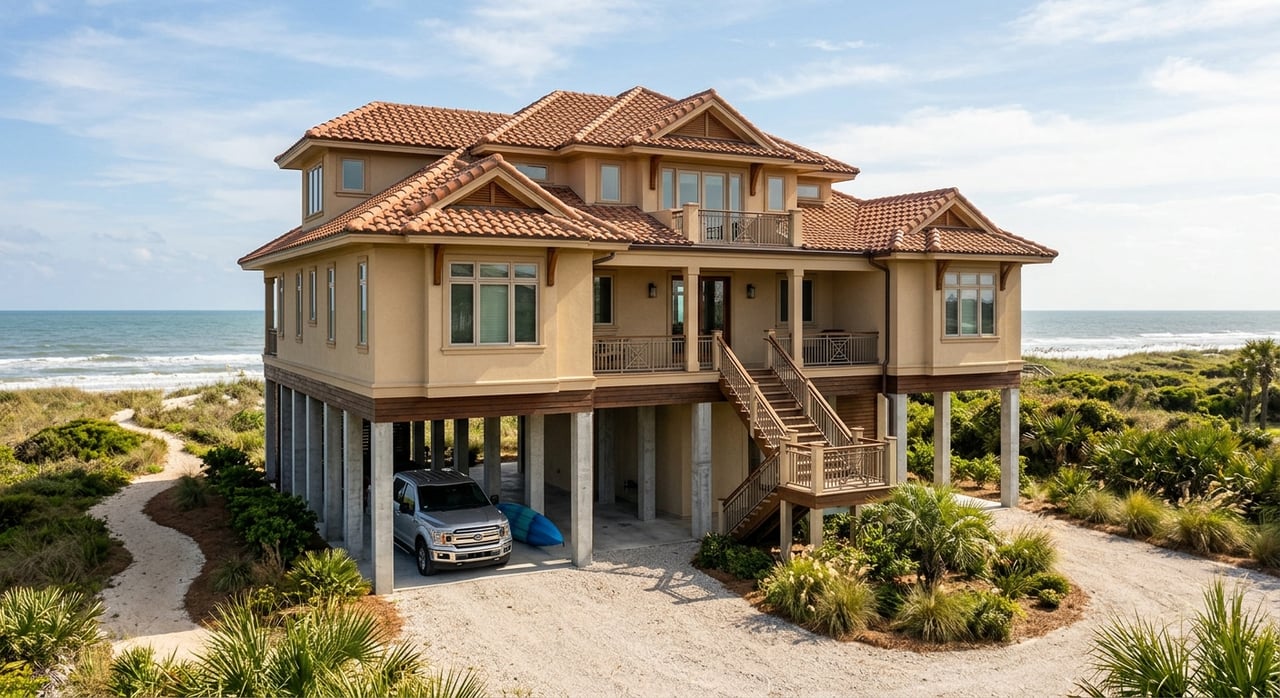
Wondering if a stilt home in Hernando Beach is the right move for you? You are not alone. Buying near the water can be exciting, but it also comes with questions about flood zones, insurance, permits, and how the home was built. This guide will help you focus on the details that matter most so you can buy with more confidence. Let’s dive in.
Why Stilt Homes Matter in Hernando Beach
In Hernando Beach, a stilt home is more than a style choice. It is often part of how coastal homes are designed to respond to flood risk and local building requirements.
That is why your decision should be based on the specific parcel, not just the view or the layout. Hernando County notes that flooding can come from heavy rainfall, storm surge, river rise, or drainage issues. The county also warns that an evacuation zone is not the same as a FEMA flood zone.
Start With Flood Maps and Elevation
One of the first things you should review is the property’s flood-zone status. FEMA identifies the Special Flood Hazard Area as the 1% annual chance flood area, and Zone V or VE includes added wave hazard.
Hernando County offers mapping tools that can help with your first review. Still, the official flood-zone source is the FEMA Flood Insurance Rate Map. The county also notes that local watershed data may affect development even when that detail does not appear on FEMA maps.
A parcel’s status can also change through a LOMA or LOMR determination. That means two homes on the same street may not have the same floodplain story, even if they look similar from the outside.
Documents to request early
Before you get too far into the process, ask for:
- A current survey
- Elevation certificate
- Flood-zone determination
- Any LOMA or LOMR paperwork
- Permits for additions, enclosures, docks, seawalls, or other waterfront improvements
These documents can help you understand both current risk and whether past work appears consistent with local requirements.
How Stilt Homes Are Built
In Florida coastal high-hazard areas and Coastal A Zones, homes must be supported on pilings or columns, be properly anchored, and be elevated to meet flood standards. The bottom of the lowest horizontal structural members must be at or above base flood elevation plus 1 foot, or the design flood elevation, whichever is higher.
That may sound technical, but the key takeaway is simple. Elevation is central to how these homes are designed for coastal conditions.
The area below the home also matters. Under current Florida residential code standards, the lower area must remain open or be enclosed only with code-compliant walls, and the pile design must account for scour.
Why the lower level deserves extra attention
Many buyers love the extra covered space under a stilt home. It can be useful for parking, storage, or access. But it should not be assumed to function like regular interior living space.
NFIP guidance says residential buildings cannot be floodproofed below base flood elevation. In practical terms, that means you should expect elevated living space above, not a fully finished ground-floor living area below.
Check Permit History and Code Timing
Not every stilt home in Hernando Beach was built under the same code edition. Florida’s building-code site currently lists the 8th Edition 2023 code and a draft 9th Edition 2026, so it is smart to confirm which code edition applied when the home was originally permitted and when later improvements were made.
This matters if the property has had updates such as enclosure work, additions, deck changes, or waterfront improvements. A well-kept home can still raise questions if the permit trail is incomplete or if improvements were made under different code standards.
If you are considering newer construction with FHA financing, there is another benchmark to know. For permits submitted on or after January 1, 2025, HUD says the lowest floor must be at least 2 feet above base flood elevation for new construction financed with FHA.
Inspect the Structure Carefully
A standard home inspection is important, but with a stilt home, you may also want a more focused look at structural and coastal wear items. Salt air, moisture, and waterfront exposure can affect components differently than they would inland.
Florida mitigation guidance points buyers toward roof-to-wall connections, shutters, gutters, tree trimming, and storm shutoffs. It also highlights corrosion checks on galvanized clips, straps, hangers, and similar connectors.
Key inspection points for coastal homes
Ask your inspector or engineer to pay close attention to:
- Pilings or columns and visible structural condition
- Corrosion on clips, straps, hangers, and connectors
- Roof-to-wall connections
- Enclosure details below the home
- Drainage patterns on the lot
- Shutters and storm-prep features
- Gutters and exterior water management
For some properties, bringing in a structural engineer can add peace of mind, especially if the home is older or if visible changes have been made at the lower level.
Understand Docks, Seawalls, and Shoreline Features
If the property includes a dock, seawall, riprap, or living shoreline, do not treat those features as background details. They can affect maintenance costs, future repair options, and permitting requirements.
Florida DEP says it issues permits for coastal construction, docks, marinas, wetlands work, and shoreline stabilization. The agency also notes that many small living-shoreline projects may qualify for a permit exemption, with review often taking about 30 days.
Questions to ask about waterfront improvements
Before closing, try to confirm:
- Who owns the dock, seawall, or shoreline feature
- Whether permits are on file for the work
- Whether past improvements match available records
- What future repairs or changes may require state review
Living shorelines may also come up during your search. DEP and UF/IFAS describe them as an alternative to hardened shoreline structures, and they may help reduce wave damage and erosion depending on site conditions.
Site conditions matter here. UF/IFAS says factors like wave climate, water depth, salinity, erosion rates, slope, tidal range, and proximity to structures should guide shoreline choices.
Plan for Flood Insurance and Lending Rules
A lot of buyers assume flood coverage is bundled into a homeowners policy. Usually, it is not. Florida consumer guidance says flood insurance is generally separate from homeowners insurance, and lenders may require it even though Florida law does not require every owner to carry it.
This is especially important in Hernando Beach, where the flood conversation is often front and center. Hernando County notes that flood claims can happen outside high-risk zones, that flood policies usually take 30 days to go into effect, and that even one inch of water can cause more than $25,000 in damage.
For FHA-insured mortgages, properties in a Special Flood Hazard Area must have flood insurance. Fannie Mae also requires flood insurance for loans it backs when the property is in an SFHA.
Ask about wind-mitigation credits too
Insurance costs are not just about flood coverage. Florida’s insurance guidance says you need a qualified wind-mitigation inspection to apply for available discounts, and the findings are documented on the Uniform Mitigation Verification Inspection Form.
That makes wind-mitigation a smart question to raise early. A home with stronger protective features may offer savings, but you need the right inspection to document them.
Build the Right Due Diligence Team
Buying a stilt home in Hernando Beach usually goes more smoothly when you have the right specialists involved early. That does not mean you need to overcomplicate the process. It just means choosing people who understand waterfront and flood-related details.
A strong team often includes:
- A local home inspector familiar with coastal properties
- A structural engineer when needed
- A flood-savvy insurance agent
- Your lender
- A marine contractor if the property includes shoreline protection or a dock
If you expect to modify shoreline features after closing, early pre-application conversations can also help clarify what may be required.
A Smart Buying Approach for Hernando Beach
The best way to buy a stilt home is to stay curious and document-driven. Beautiful views and elevated design can be a huge draw, but they should be paired with careful review of maps, elevation records, enclosure details, permit history, and insurance expectations.
In Hernando Beach, the most important questions are often not visible in the listing photos. They are answered through surveys, certificates, inspections, and local records.
When you take that approach, you give yourself a much better chance of buying a home that fits both your lifestyle and your comfort level. That is especially valuable if you are relocating, buying a second home, or purchasing waterfront property for the first time.
If you are exploring stilt homes in Hernando Beach and want local, detail-focused guidance, The Philhower Group can help you compare properties, review the right questions, and move forward with confidence.
FAQs
What should you check before buying a stilt home in Hernando Beach?
- You should review the flood-zone determination, elevation certificate, survey, permit history, and any records for docks, seawalls, enclosures, or shoreline improvements.
Why is the elevation certificate important for a Hernando Beach stilt home?
- The elevation certificate helps show how the home’s elevation relates to floodplain requirements and can be important for floodplain compliance documentation and insurance review.
Can the area below a Hernando Beach stilt home be finished as living space?
- Buyers should be cautious here, because residential buildings cannot be floodproofed below base flood elevation, so the lower area is generally not something you should assume functions as standard finished living space.
Do you need flood insurance for a stilt home in Hernando Beach?
- Flood insurance is not required by Florida law for every property, but lenders may require it, and FHA-insured and certain Fannie Mae-backed loans require it for properties in a Special Flood Hazard Area.
What should you ask about a Hernando Beach dock or seawall before closing?
- You should confirm ownership, ask whether permits are on file, and find out whether future repairs or changes may require state review.
How do you verify a Hernando Beach property’s flood zone?
- Start with Hernando County mapping tools for a first look, but rely on the FEMA Flood Insurance Rate Map as the official flood-zone source.